


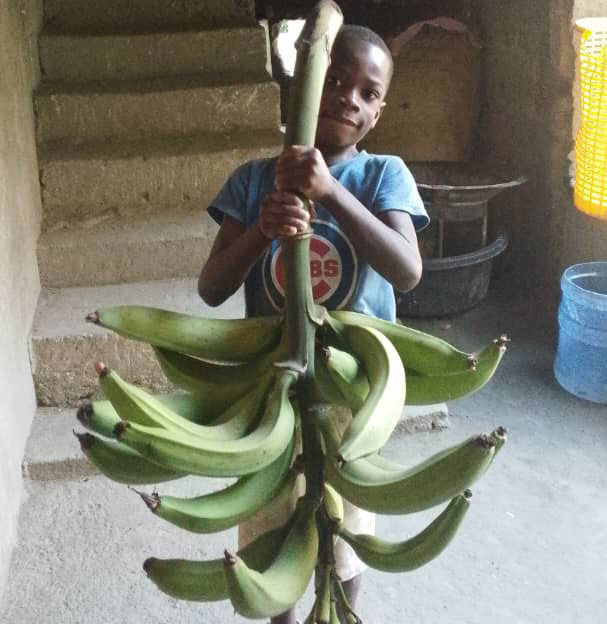
Anticipating fried plantains for dinner!
Update Haiti
It has been a busy year Amurtel programs in Haiti. Our children feel at home now in Ste Suzanne after leaving Port au Prince a few years ago, attending classes, preparing for important exams, all while engaged in a rigorous music program. Our young musicians are in high demand to play for community events in surrounding villages and towns, and were recently invited to participate in the grand parade of Cap Haitien celebration of Haiti’s Independence Day. Everyone enjoys harvesting fruit, running in the fields, swimming in the stream behind the house, and visiting with new friends.
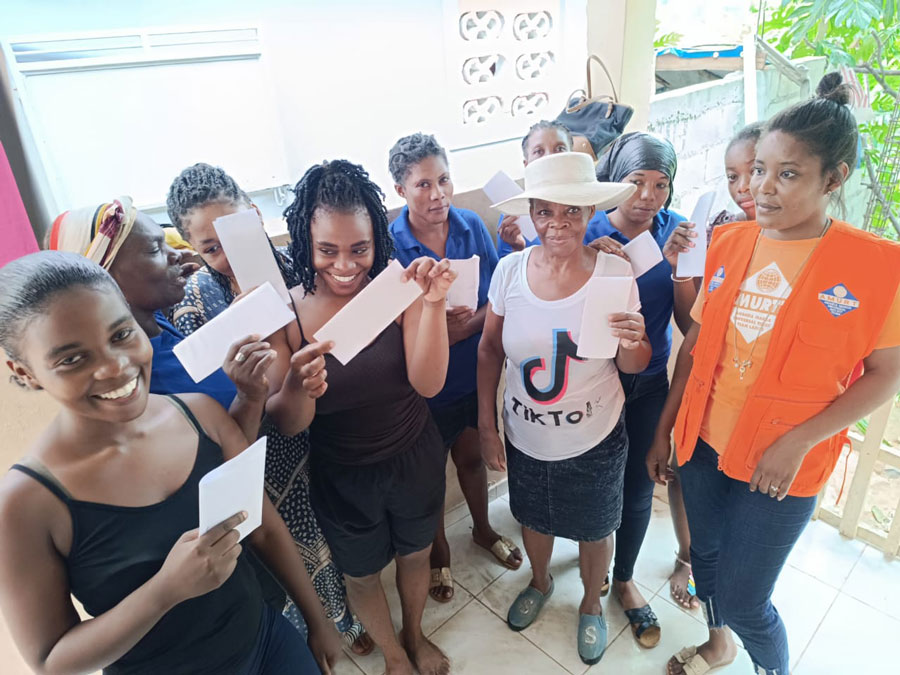
A new Micro- Credit group is formed and the women are excited upon receiving their first investment.
Despite gang violence continuing across the country, the women in the Port au Prince area are finding ways to attend the Amurtel self-help and micro-credit meetings. This takes enormous determination as transport is limited. These women are committed to bettering the lives of their children and families, which in turn benefits the entire community.
Update on Amurtel’s work in Nigeria
Female Genital Mutilation has reduced in Nigeria over the last decades. But in remote rural villages harmful traditional practices still continue. AMURTEL has trained women volunteers from these villages to act change agents to bring the message door to door, to all the families, to try to eliminate this practice that is violation of the rights of women and girls, and danger to their health and wellbeing.
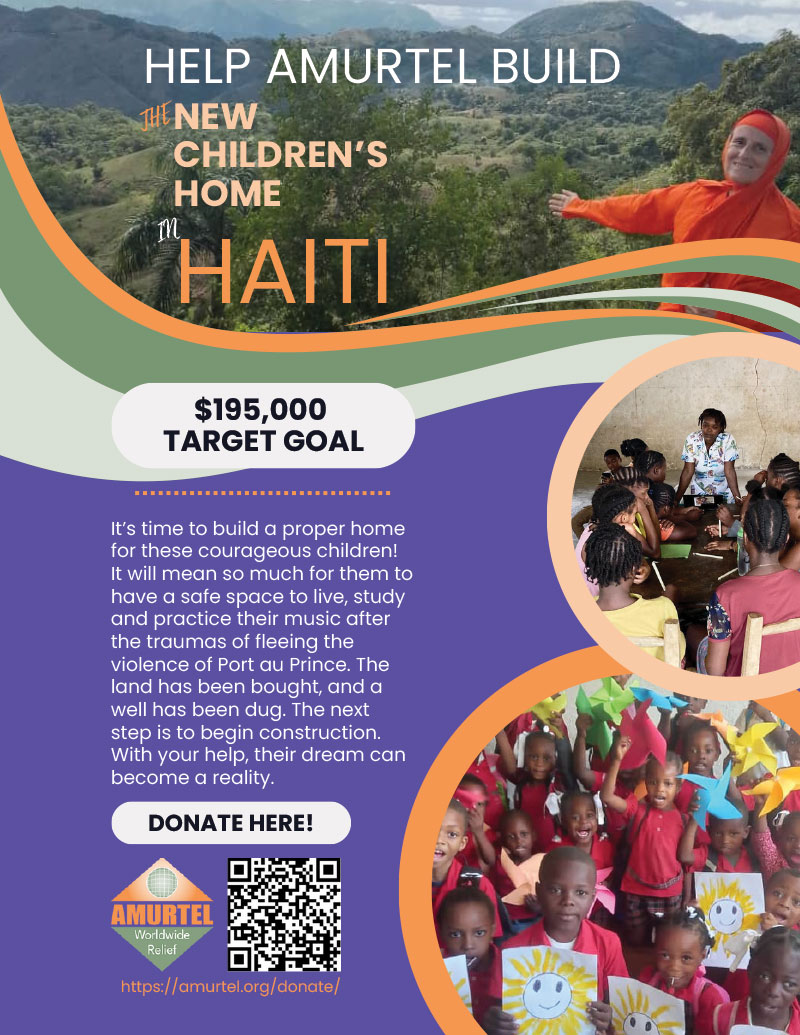
HELP AMURTEL BUILD THE NEW CHILDREN’S HOME IN HAITI!
May 15, 2025
TARGET GOAL $160,000
ALL NEWS

Catastrophic Flooding Sweeps Across Vermont
One of the worse storms of the century raged across Vermont on July 10, causing catastrophic damage.

Earthquake Relief in Turkey
AMURTEL has begun relief efforts in Turkey, focusing first on getting blankets and food to survivors. Our teams area also preparing to set up Psychological Trauma counseling centers along with Child Friendly Spaces.

Refugee Relief Effort in Romania
You can provide safety, protection and care to Ukrainian refugee children fleeing the bombs and shelling to the safety of Romania.

Hurricane Fiona Relief, Puerto Rico
With over a million people left without power or clean drinking water, Puerto Rico is reeling from the fury of Hurricane Fiona.

AMURTEL
AMURTEL, directed and managed by women, provides disaster relief and works with women and children to build local capacity. With a focus on community self-direction, our programs target progressive education, financial self-sufficiency, health, and the creation of nurturing homes for children in need.
OUR PROGRAMS


DISASTER RELIEF
AMURTEL provides immediate disaster relief in the aftermath of natural and human-made disasters. Partnering with other organizations, we provide basic needs to the affected communities, including food, and medical care and post-disaster cleanup. To support recovery from trauma, we establish child friendly spaces and provide psychosocial support.


